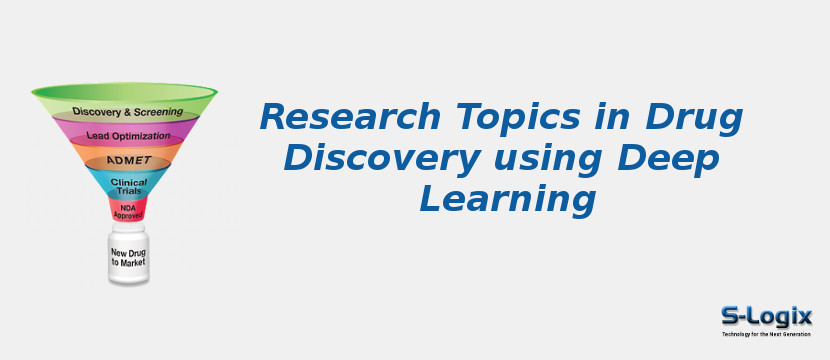
Research Topics in Drug Discovery using Deep Learning
Share
PhD Thesis Topics for Drug Discovery using Deep Learning
Deep learning has revolutionized the field of drug discovery by enabling the automated analysis and prediction of molecular properties, protein–ligand interactions, and potential therapeutic effects from vast biochemical datasets. Traditional drug discovery pipelines, which are costly and time-consuming, are increasingly being replaced or accelerated by deep learning models capable of learning high-dimensional molecular representations from raw data. Techniques such as graph neural networks (GNNs), transformers, variational autoencoders (VAEs), diffusion models, and reinforcement learning frameworks have shown significant promise in predicting drug–target affinity, de novo molecule generation, virtual screening, and lead optimization. Furthermore, multimodal learning approaches that integrate genomic, proteomic, and chemical data have enhanced the understanding of drug mechanisms and toxicity prediction. Federated and privacy-preserving deep learning methods are also gaining traction, enabling collaborative drug research across institutions without data sharing risks. The convergence of AI-driven molecular simulation, generative chemistry, and high-performance computing continues to push the boundaries of computational drug design, opening new opportunities for faster, more efficient, and more accurate therapeutic discovery.
Latest Research Topics in Drug Discovery using Deep Learning
AI-Driven Molecular Generation using Diffusion and Transformer Models : Recent developments in Diffusion Models and Transformer-based architectures have transformed the landscape of de novo molecular design. These models learn complex chemical distributions and generate novel compounds with desired pharmacological profiles. For instance, MolDiff and ChemGPT use large molecular datasets to design drug-like compounds with optimized ADMET (Absorption, Distribution, Metabolism, Excretion, and Toxicity) properties. Moreover, by incorporating reinforcement learning–based property constraints, they allow for controllable molecular synthesis that drastically reduces the time required for early-stage discovery.
Graph Neural Networks for Drug–Target Interaction Prediction : Graph Neural Networks (GNNs) have become a cornerstone in modeling molecular structures and protein–ligand interactions. Molecules are represented as graphs, where atoms are nodes and bonds are edges, allowing GNNs to learn high-order spatial and chemical relationships. Advanced models such as Graph Attention Networks (GAT) and Graph Isomorphism Networks (GIN) effectively capture 3D molecular conformations and predict binding affinities. These approaches outperform traditional docking simulations and are now widely used for predicting off-target effects, toxicity, and potential repurposing candidates.
Multimodal Deep Learning for Drug Repurposing : The integration of diverse biomedical modalities—such as molecular graphs, text embeddings, gene expression data, and protein sequences—has enabled more robust drug repurposing frameworks. Transformer-based multimodal systems like DrugCLIP and BioMegatron can align molecular and textual representations, helping discover new therapeutic applications for existing compounds. This multimodal fusion accelerates the identification of candidates for diseases like cancer, Alzheimer’s, and emerging viral infections, drastically reducing the time and cost associated with new drug development.
Federated Learning for Collaborative Drug Discovery : Federated learning (FL) has emerged as a powerful paradigm for privacy-preserving collaborative research in drug discovery. It enables multiple institutions to jointly train predictive models without sharing sensitive proprietary or clinical data. Frameworks such as FedBioMed and FL-Molecule employ secure aggregation and differential privacy techniques to exchange model gradients rather than raw data. This approach enhances the generalization capability of drug–target interaction models while fostering cooperation among pharmaceutical industries, hospitals, and research organizations globally.
Reinforcement Learning for Automated Lead Optimization : Deep Reinforcement Learning (DRL) techniques automate the iterative refinement of drug candidates by treating molecule design as a sequential optimization problem. Using reward functions that reflect pharmacokinetic and pharmacodynamic properties, DRL agents learn to modify molecular structures toward higher efficacy and safety. Hybrid architectures that combine policy-gradient methods with variational autoencoders (VAEs) can efficiently explore vast chemical spaces and yield optimized leads with minimal human intervention—accelerating the hit-to-lead and lead optimization phases.
Explainable AI in Drug Discovery : The adoption of Explainable AI (XAI) is addressing one of the major challenges in deep learning–based drug discovery: interpretability. Techniques such as SHAP (Shapley Additive Explanations), LIME, and attention heatmaps make it possible to identify the substructures or atomic interactions responsible for a model’s prediction. By offering interpretability, these models enhance scientific understanding, improve trust among domain experts, and support regulatory validation of AI-driven results—especially critical for pharmaceutical compliance.
Quantum-Inspired Deep Learning Models for Drug Screening : Quantum-inspired deep learning models leverage principles from quantum computing to simulate molecular interactions with unprecedented accuracy. By using variational quantum circuits and quantum graph embeddings, these systems accelerate the prediction of molecular energy states and reaction pathways. Hybrid architectures such as QChemNet and VQE-GNN have demonstrated superior performance in large-scale virtual screening and binding energy prediction. In 2025, these approaches are leading the next generation of quantum–AI synergy in computational drug discovery, allowing faster exploration of vast chemical spaces with high precision.
 Research Breakthrough Possible @S-Logix