Research Breakthrough Possible @S-Logix

Office Address
- 2nd Floor, #7a, High School Road, Secretariat Colony Ambattur, Chennai-600053 (Landmark: SRM School) Tamil Nadu, India
- pro@slogix.in
- +91-81240 01111
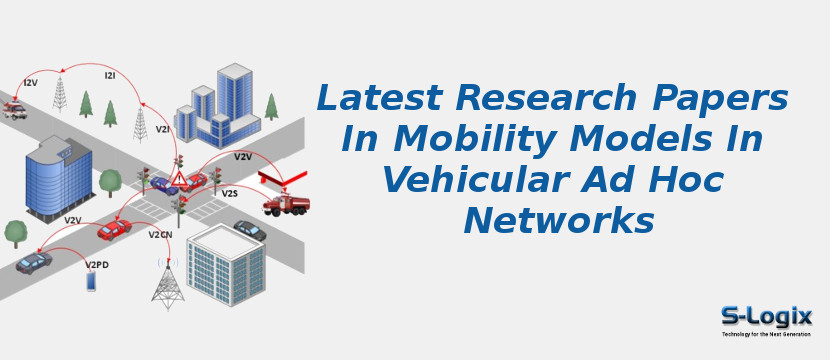
Recent research on mobility models for VANETs is focused on developing more realistic, adaptive, and application-aware models that capture the dynamic behaviors of high-mobility vehicles, urban road constraints, lane changes, acceleration/deceleration patterns, and vehicle clustering phenomena. Scholars are advancing from simple random or grid-based movement assumptions toward hybrid microscopic-mesoscopic simulation frameworks and models that incorporate predictive mobility and behaviour forecasting through machine learning. New work includes comparative studies between microscopic and mesoscopic models using Monte-Carlo simulations to reflect real-world multi-lane highway and urban scenarios. These refined mobility models help improve the validity of VANET protocol evaluations, especially for routing, congestion control and network reliability studies under realistic traffic conditions.